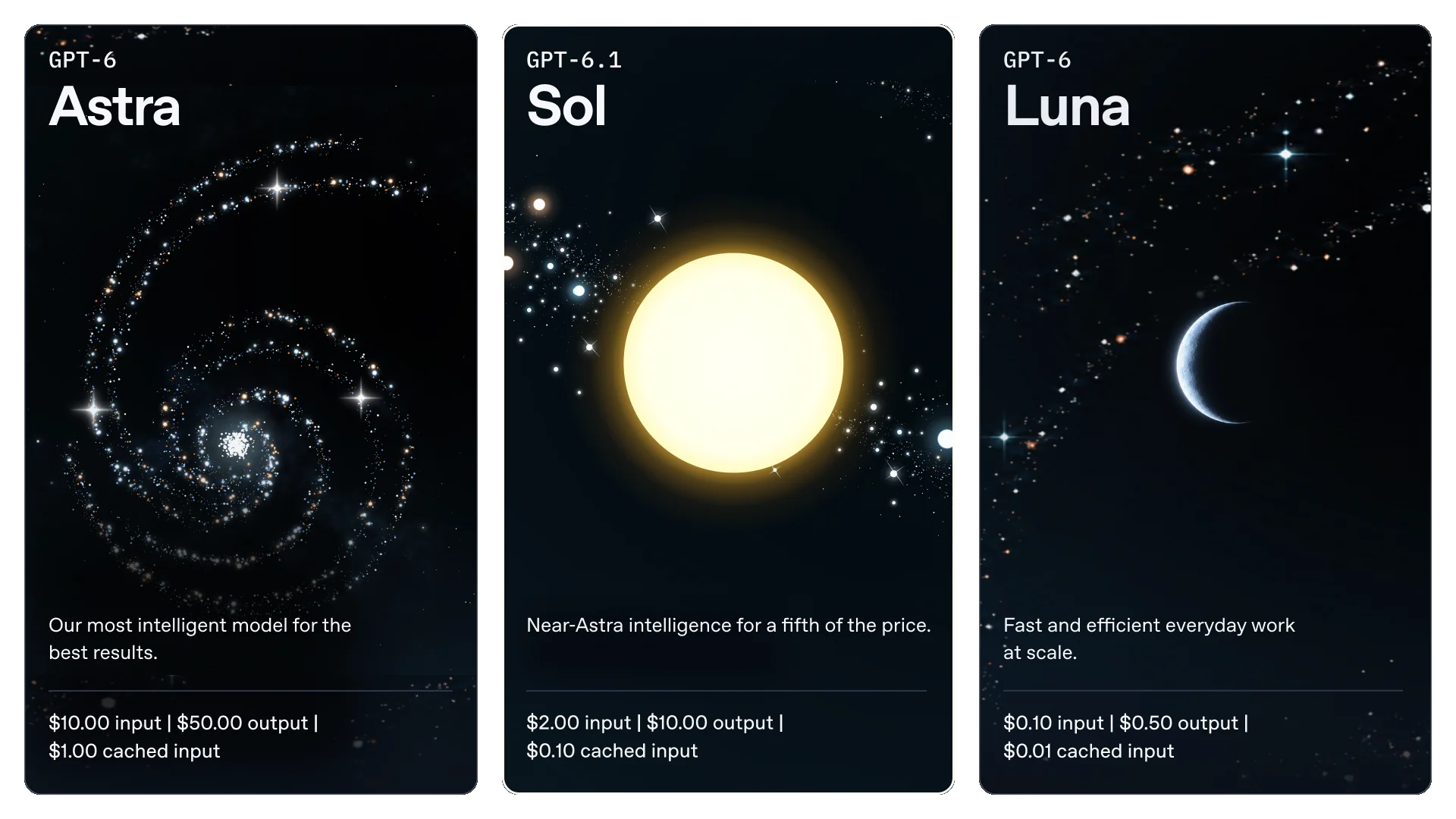
OpenAI introduced GPT-6.1 Sol on September 29, 2026 at DevDay 2026, as an upgrade to GPT-6 Sol. According to OpenAI, it nearly matches GPT-6 Astra on agentic coding, computer use, and professional work at one-fifth of Astra’s standard token prices. Those claims come from vendor measurements; adoption still needs testing on your own workload.
What did OpenAI announce?
GPT-6.1 Sol is positioned as the new middle point: above Sol, far below Astra’s price. Official API pricing is $2 per million input tokens, $10 per million output tokens, and $0.10 for cached input. On DeepSWE v1.1, OpenAI reports GPT-6.1 Sol matches GPT-6 Astra at roughly one-fifth of the cost; on AutomationBench (run by Zapier), it scores 2.2 points above Opus 5.5 at medium effort at about a third of the cost. The model is available via the API as gpt-6.1-sol and for ChatGPT Work and Codex users; OpenAI states it is not yet available in Chat.
How does OpenAI position it in the catalog?
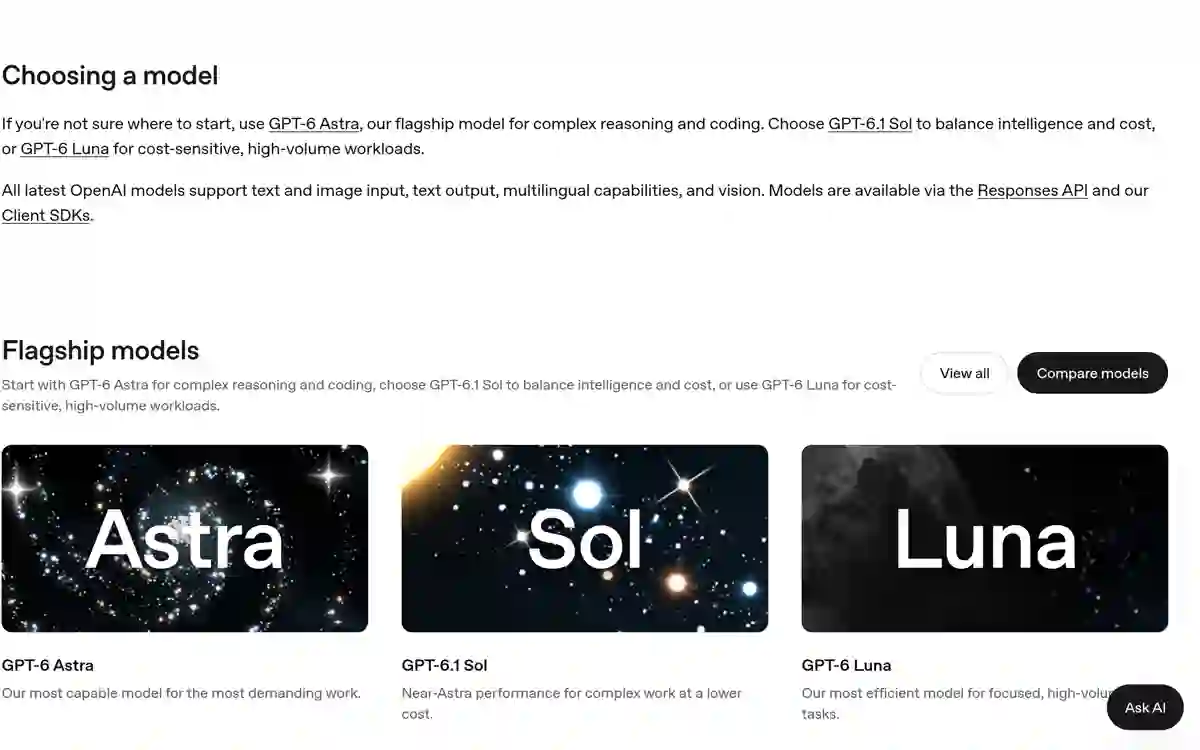
On its official model documentation page, OpenAI places GPT-6 Astra as the flagship for complex reasoning and coding, GPT-6.1 Sol as the balance of intelligence and cost, and GPT-6 Luna for cost-sensitive, high-volume workloads. This model-selection guidance is consistent with the announcement’s narrative.
What should you evaluate before adopting it?
The following is our editorial framework, not a test report: compare candidate models on your real tasks with identical inputs and tool boundaries, and measure answer accuracy, tool-calling behavior, and total cost including retries. Note that vendor benchmarks use specific effort settings and harnesses; per-task numbers on your workload can differ. Also verify model availability on the platform you use (API, Bedrock, or Foundry) at implementation time.
Cross-vendor evaluation like this is part of our AI consulting service, and we apply the cost-guardrail pattern in our LLM cost gateway project.
When is GPT-6.1 Sol worth trying?
Try it when your workloads are dominated by repeatable professional or coding tasks that flagship model pricing has held back. Start with one workflow in staging against pre-agreed success metrics, rather than replacing the whole system at once.
Sources were checked on October 1, 2026. This article does not cover pricing changes after that date or independent benchmark results. If you want to compare model candidates for a running system, talk to us.