Anthropic announced Claude Opus 5.5 on September 22, 2026, the first model in the Claude 5.5 family. According to Anthropic, it performs at the level of Claude Fable 5.1 on most work and costs 40% less than Opus 5 on typical workloads. Those are vendor claims; a migration decision still needs evidence from your own workload.
What did Anthropic announce?
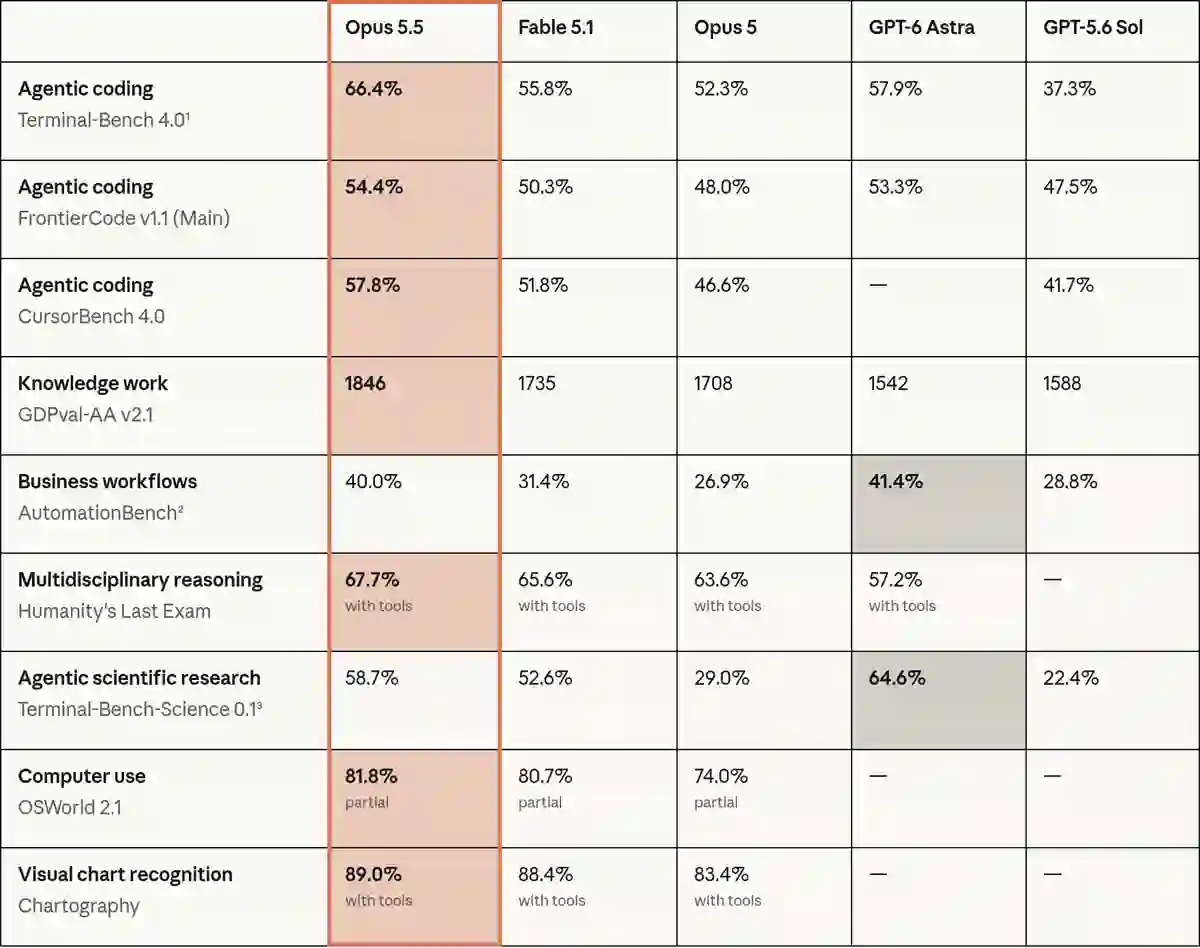
Opus 5.5 is Anthropic’s new flagship for complex work: agentic coding, computer use, and knowledge work. In its official benchmark table, Anthropic reports 66.4% on Terminal-Bench 4.0 and 1846 Elo on GDPval-AA v2.1, ahead of Opus 5 and, on some measurements, ahead of GPT-6 Astra. These are vendor measurements, not Agentive Labs test results.
How does pricing compare with Opus 5?
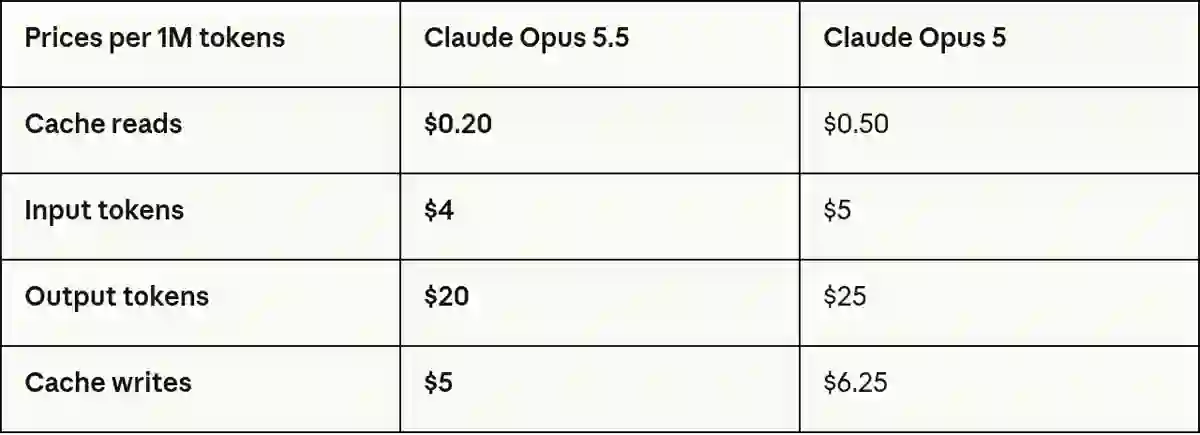
According to the official pricing table, input is $4 and output $20 per million tokens (20% lower than Opus 5), while cache reads drop 60% to $0.20 per million tokens. Because cache reads dominate agentic workloads, that line item matters most for agent systems. Anthropic also offers a separately priced Fast mode ($8/$40), and the model is available on AWS, Google Cloud, and Azure under the ID claude-opus-5-5.
How should you evaluate it before migrating?
The following is our editorial evaluation framework, not a test report: take real tasks from staging, run the incumbent and candidate models with identical inputs and tool boundaries, then compare. For agent work, watch tool-argument correctness, whether patches pass your test suite, total tokens including retries, and tail latency. Define acceptance criteria before looking at results, and save prompt versions so the comparison can be repeated.
We apply this pattern in our LLM cost gateway project, and it is part of our AI agents and automation service.
When does switching models make sense?
Switch per task type, not all at once: start with one workflow behind a flag, observe its failures, and keep a path back to the previous configuration. One detail worth noting from this announcement: some cybersecurity tasks are transparently rerouted to a different model, so agent behavior in that area can differ from the model you pinned.
Sources were checked on October 1, 2026. This article does not cover integration configuration or evaluation results for a specific application. If you are weighing a model migration for a system already in production, talk to us.